

Skip to content

Guiding Principles

Guiding Principles

think! Mathematics aims to help teachers deliver mathematics lessons that emphasise the development of strong concepts, critical thinking skills and problem-solving skills.

think! Mathematics provides teachers with suggestions and is in no way prescriptive. Teachers are encouraged to conduct the lessons in ways that they are comfortable with, keeping in mind a few principles.

  1. 01. Exploring before Structure

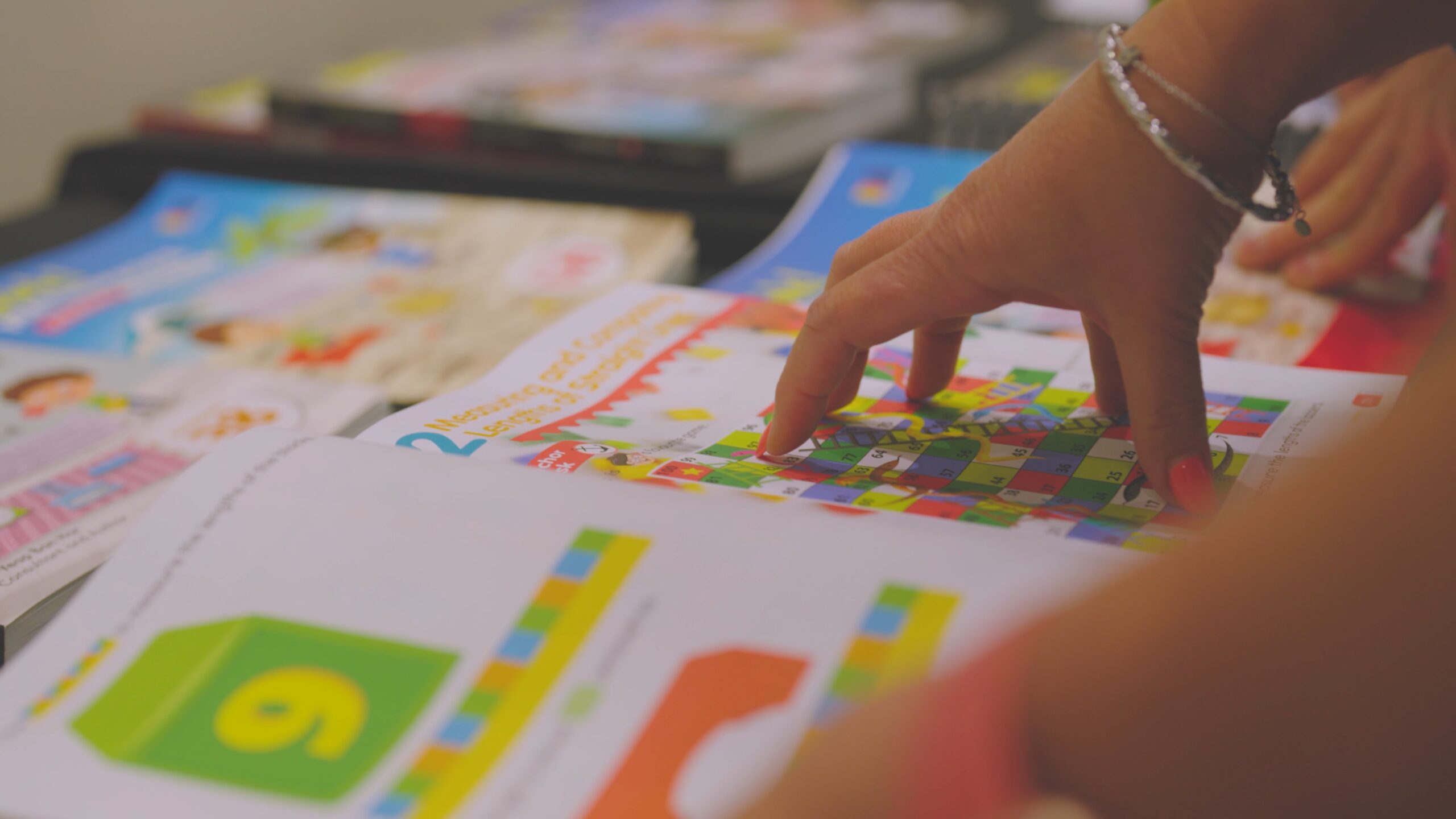
    Pupils are encouraged to explore ideas before they are being helped to organise their ideas into some kind of mathematical structure. In think! Mathematics, teachers are asked to allow pupils to explore the Anchor Task before discussing pupils’ methods. It is best that the
    exploration is done with concrete materials and
    in a collaborative setting.

  2. 02. Concrete before Abstract

    Pupils are encouraged to learn abstract ideas through concrete experiences and pictorial representations. This is often referred to as the C-P-A Approach. In think! Mathematics, concrete materials should be provided to pupils during the exploration stage. Visuals, such as bar models, are used extensively.

  3. 03. Meaning before Procedure

    Pupils are encouraged to explain their thinking. The focus is on developing relational understanding even as pupils learn particular procedures. Pupils are never expected to carry out rote procedure. In think! Mathematics, mathematical procedures are explained using diagrams and dialogues. Pupils are encouraged to negotiate for meaning of the ideas they encounter.

  4. 04. Learning before Practice

    In think! Mathematics, every lesson begins with an Anchor Task for meaningful and deep learning. The lesson is then followed by the Guided Practice which allows the identification of errors and misconceptions which are remediated before pupils practise on their own.